From a city scarred by racial segregation and the legend of Sun Ra, across the open ocean and an attempt to establish musical contact with a humpback whale, to an Estonian duo conquering world stages with zombie-folk – we present the next titles in the DocFilmMusic competition at the 66th Krakow Film Festival. They will be competing for the Golden Heynal, demonstrating just how far a music documentary can reach. Three films, three distinct tonalities, and one common denominator: sound that triggers memory, forges connections, and transcends boundaries – between people, between generations, and even between species.
Although each of these films operates in a different register – from a historical-biographical essay, through an oceanic meditation on interspecies communication, to an intimate documentary about life on tour and beyond it – all are united by the conviction that music is something more than just entertainment. It becomes a language of memory, a tool for building relationships, and an impulse towards change – opening new chapters, summoning courage, and pushing past one’s own limitations.
A Jazzman from Outer Space
In The Magic City – Birmingham According to Sun Ra, filmmakers Guillaume Maupin and Pablo Guarise – working in close collaboration with the local community – return to Birmingham, Alabama: the birthplace of Herman Poole Blount, later known as Sun Ra, a jazz icon and pioneer of Afrofuturist imagination. The film guides the viewer beginning with the story of an artist who presented himself as a visitor from outer space to a very particular place and its history – a city of racial segregation, inequality, and the memory of violence, but also of the former glory of the ‘Magic City’, now preserved mainly in archives and scattered traces.


By juxtaposing archival materials with contemporary images of Birmingham, the filmmakers sketch a portrait of the musician and a portrait of the community that gave birth to his imagination – one turned towards the future yet deeply rooted in the experience of the American South. It is no coincidence that the film opens with Sun Ra’s own words: ‘They say that “history repeats itself.” But “history” is only his story. You haven’t heard my story yet… History repeats itself, but my story is endless.’ It is precisely this tension between the recurring violence of history and the undiminished power of imagination and ‘cosmic jazz’ that lends this narrative its own hypnotic rhythm.
Songs of/for a Whale
If Sun Ra reached for the cosmos, the protagonist of The Musician and The Whale moves in the opposite direction – beneath the surface of the ocean – in an attempt to make contact with a different, non-human world. Director Valentin Paoli approaches the subject of music from a completely different perspective, telling the story of a renowned French composer and DJ who draws inspiration from recordings of whales swimming towards boats when his compositions are played. Rone therefore sets out on the ocean alongside marine biologists and specialists to discover whether music might serve as a form of communication with a humpback whale – and if not a fully-fledged ‘dialogue’, then at least an attentive gesture directed towards another species.
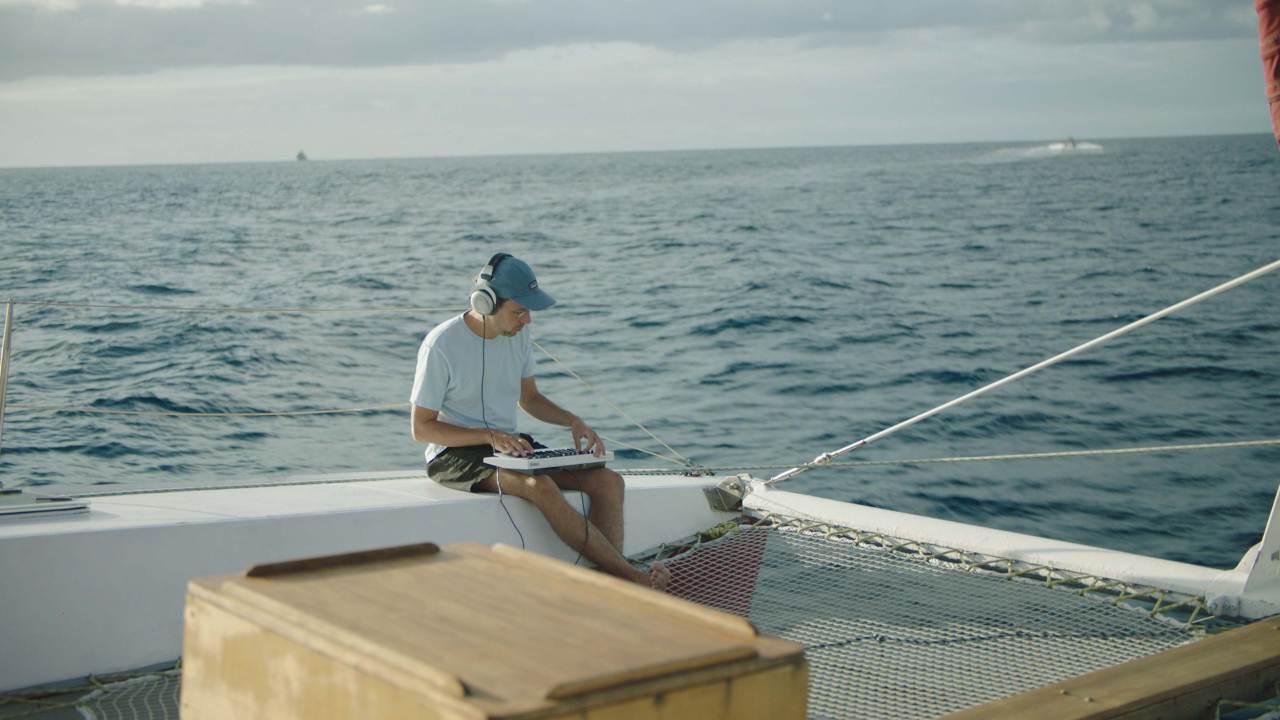
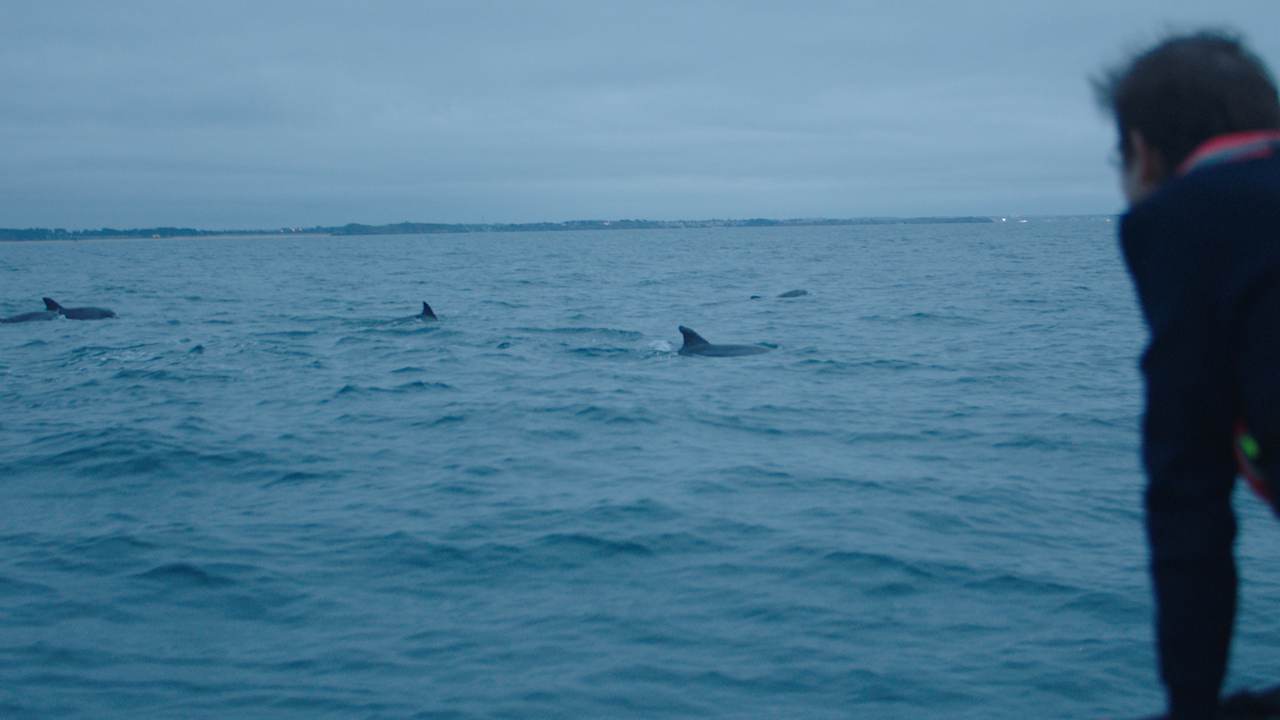
Paoli steers this tale with tenderness and visual panache, transforming a scientific/artistic experiment into a moving story about listening, attentiveness, and the limits of human communication. The film does not only ask whether contact is possible but also interrogates humanity’s readiness and sensitivity to listen to that which eludes familiar codes and languages.
Puul(uu)p non-fiction
Humour, self-deprecation, and the pulse of everyday life resound through Puuluup – Cables in the Car by Taavi Arus, who follows two middle-aged Estonian musicians with warmth and a superb sense of rhythm. Both are fathers, partners, people thoroughly immersed in the ordinary – who unexpectedly find themselves on international stages, and even at Eurovision. The duo Puuluup not only revives a nearly forgotten, virtually extinct instrument known as the talharpa, but have also constructed an entirely original musical language – underpinned by wry humour and a punk sensibility – around its distinctive sound. When asked what exactly it is they play, they answer without hesitation: zombie-folk, or more precisely – neo-zombie post-folk.


Arus sets concert-stage energy against domestic bustle, demonstrating that late-arriving success need not mean a rupture with everyday life, but may in fact spring directly from it. The result is a warm, funny, and thoroughly musical portrait of artists who, in their own delightfully unhinged fashion, take on ageism – reminding us that it is never too late to fulfil one’s dreams.
Selected titles from the DocFilmMusic competition:
- Farruquito, a flamenco dynasty, dir. Santi Aguado, Reuben Atlas, Spain, USA, 90’, 2025
- Kaprálová, dir. Petr Záruba, Czech Republic, 70’, 2025
- The Magic City – Birmingham According to Sun Ra, dir. Guillaume Maupin, Pablo Guarise, Belgium, 100’, 2025
- The Musician and The Whale, dir. Valentin Paoli, France, 83’, 2026
- Puuluup – Cables in the Car, dir. Taavi Arus, Estonia, 96’, 2026
- Meant to Be, dir. Oliver Mark Toth, Hungary, 84’, 2026
We recently published a sneak peek presenting the first music documentary titles invited to the DocFilmMusic competition – you can read it here. However, these are still not all the productions that will be competing for the Golden Heynal – we will announce the final party of the programme shortly.
Insider Passes for the 66th Krakow Film Festival are now on sale!
The Krakow Film Festival is on the exclusive list of film events qualifying for the Academy Awards® in short film categories (fiction, animation, documentary) and feature-length documentary, the European Film Awards in the same categories, and serves as a qualifying event for the BAFTA Awards.
The Krakow Film Festival is organised with financial support from the City of Krakow, the Polish Film Institute, the Creative Europe MEDIA Programme, and the Ministry of Culture and National Heritage from the Culture Promotion Fund – a state purpose fund. The Polish Filmmakers Association serves as co-organiser.
The 66th Krakow Film Festival will be held in cinemas from 31 May to 7 June 2027 and online on KFF VOD from 5 June to 19 June 2026.