What connects Radu Jude, Andrea Arnold, Agnieszka Smoczyńska, Ruben Östlund, Magnus von Horn, and Kornél Mundruczó? “Masters in Shorts” is a new section of the Krakow Film Festival that directs attention towards the beginnings of great careers, going back to the moment when creative personalities were still starting to shape. It was here, in KFF competitions, that their films were presented, awarded, and noticed years ago, long before they achieved worldwide fame. At the festival’s 66th edition, we are going to screen six early films by these outstanding European filmmakers – reminding audiences that it was the short form that shaped their authorial language, and that Kraków has for decades remained a place that recognises and supports the future masters of cinema.
I’m delighted that the KFF audience will see these excellent short films, awarded our Golden and Silver Dragons or Hobby-Horses before the makers of these films became major figures in cinema. It’s worth examining their cinematic beginnings – the glimmers of their own style, the maturation of their directorial craft, and above all the moving stories that would later find creative development in feature-length form – remarks Artistic Director Anita Piotrowska.
Mothers, Wives, Divas, Mistresses
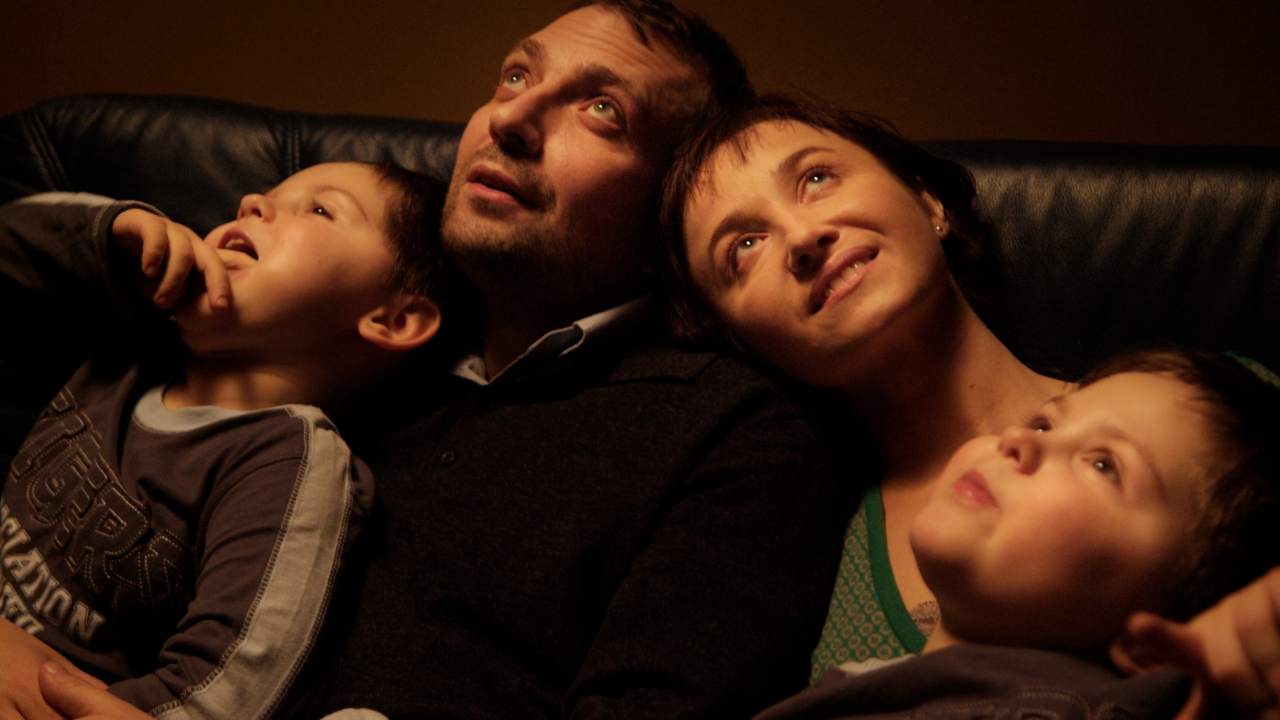
Aria Diva (2007) by Agnieszka Smoczyńska – director of the acclaimed The Lure (2015) – constitutes a striking seed of her interest in themes of female identity and the emotional tensions inherent in woman-to-woman relationships. The film, based on Olga Tokarczuk’s short story Ariadna na Naxos (‘Ariadne on Naxos’), tells the story of Basia – a thirty-year-old woman who abandoned her academic career to devote herself to family life. Her ordered daily routine is disrupted when a charismatic opera diva, endowed with a voice of almost hypnotic power, moves into apartment upstairs. A seemingly innocent fascination gives rise to an intense bond, gradually transforming into an ambiguous feeling that forces the protagonists to confront their own desires. The magnificent cast – with Gabriela Muskała and Katarzyna Figura in the lead roles – underscores the emotional depth of the narrative, turning Aria Diva into a subtle yet penetrating portrait of a moment in which an encounter with the Other reveals what had so far remained unspoken. At the Krakow Film Festival, this title was honoured with two awards – the Silver Dragon and the Silver Hobby-horse.
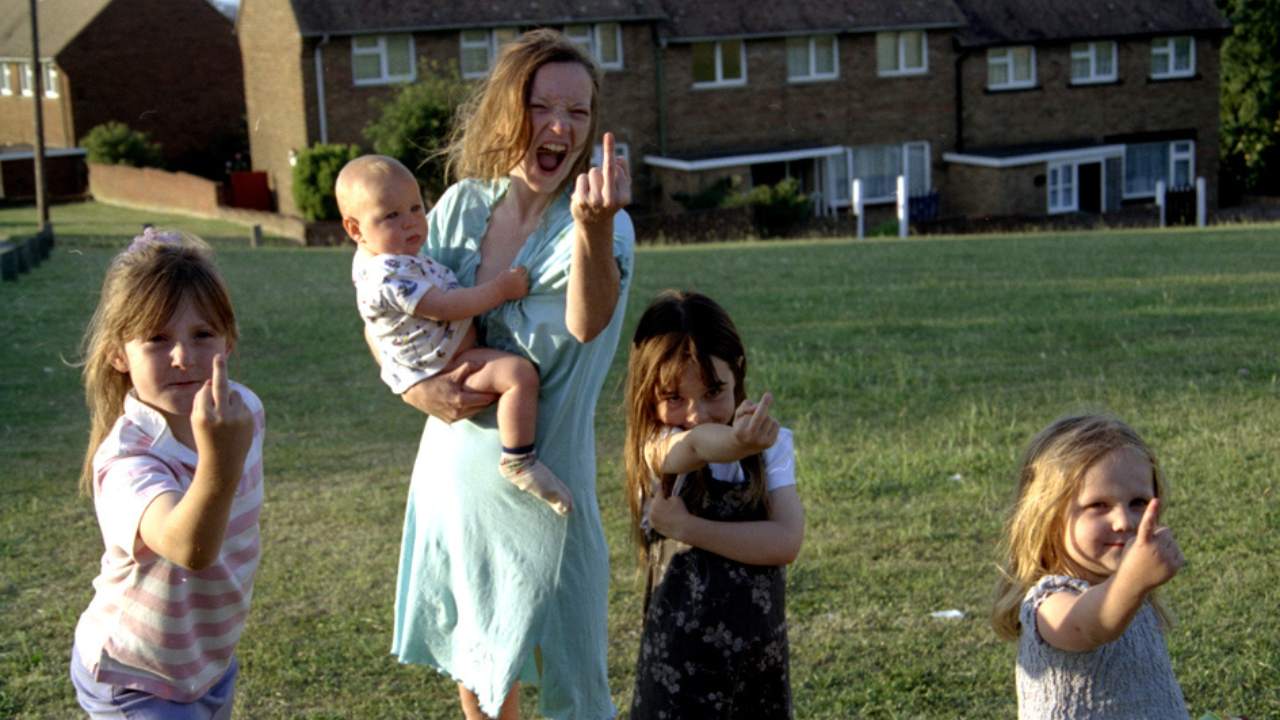
The festival audience will also find the feminine perspective as well as the bright and dark sides of motherhood in the Oscar-winning Wasp (2003) by Andrea Arnold, future creator of Fish Tank (2009) and American Honey (2016). This short film, pivotal in the British director’s career – over twenty awards in total, including the Golden Dragon at the Krakow Film Festival – focuses on Zoë, a single mother of four living on the social margins of Dartford, barely making ends meet. A chance encounter with a man and the prospect of her first date in years awakens in her a desire to step beyond the role of a mother. The narrative, disrupted by the appearance of the titular wasp like a signal of mounting tension, gradually reveals the fragility of this momentary illusion of carefree abandon – reality doesn’t relent, and the weight of responsibility does not vanish for a moment. Arnold, as in many of her later films, directs attention towards the peripheries of society, portraying motherhood and femininity without an unnecessarily moralistic tone.
Fatherly Love
Whilst the films of Andrea Arnold and Agnieszka Smoczyńska focus more on presenting the feminine perspective, revealing amongst other things the various faces of motherhood and the sacrifices that go along within it, what comes to the fore in Radu Jude’s film is a quiet, unspoken paternal tenderness that manifests itself through gestures. The Tube with a Hat (2006) is a surprisingly modest title within the oeuvre of a director now associated with provocatively elaborate titles such as Do Not Expect Too Much from the End of the World (2023), I Do Not Care If We Go Down in History as Barbarians (2018), or the Golden Bear-winning Bad Luck Banging or Loony Porn (2021). This contrast reminds us that Jude began not only with concise titles but also with the short form, through which the filmmaker – drawing on the aesthetics of the Romanian New Wave – attracted the attention of the Sundance and Krakow Film Festival juries as early as 2007, receiving the Silver Dragon.
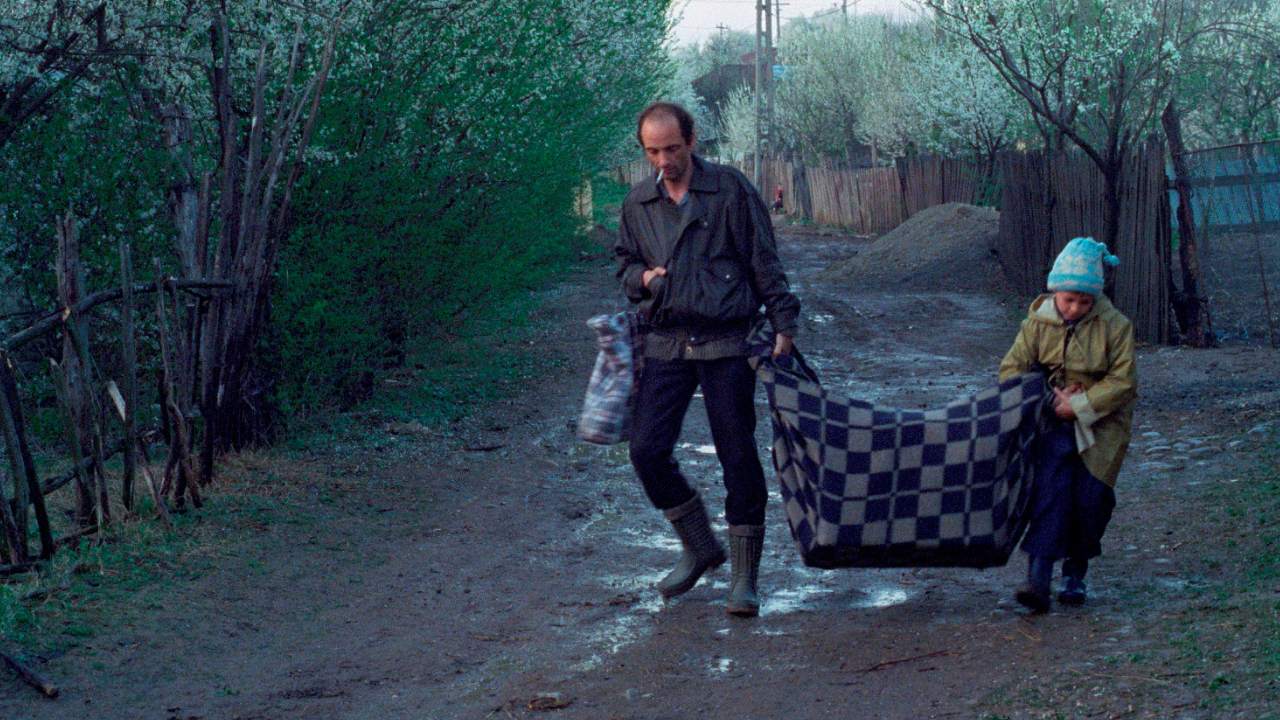
The Tube with a Hat is a simple yet profoundly touching story about seven-year-old Marian from an impoverished village who, at dawn, persuades his father to go to the city to repair an old TV set – their only window onto the world. Following the convention of a road film, the father and the son set off on a rainy, car-less odyssey, racing against time because a Bruce Lee film is to be broadcast on TV that very evening. Sprinkled with subtle humour, this intimate portrait sketches a depiction of a rough yet deep bond between the protagonists, while at the same time regarding the realities of provincial life with a touch of irony, reminding us that it is often the smallest things that carry the greatest emotional weight.
Moral Anxieties
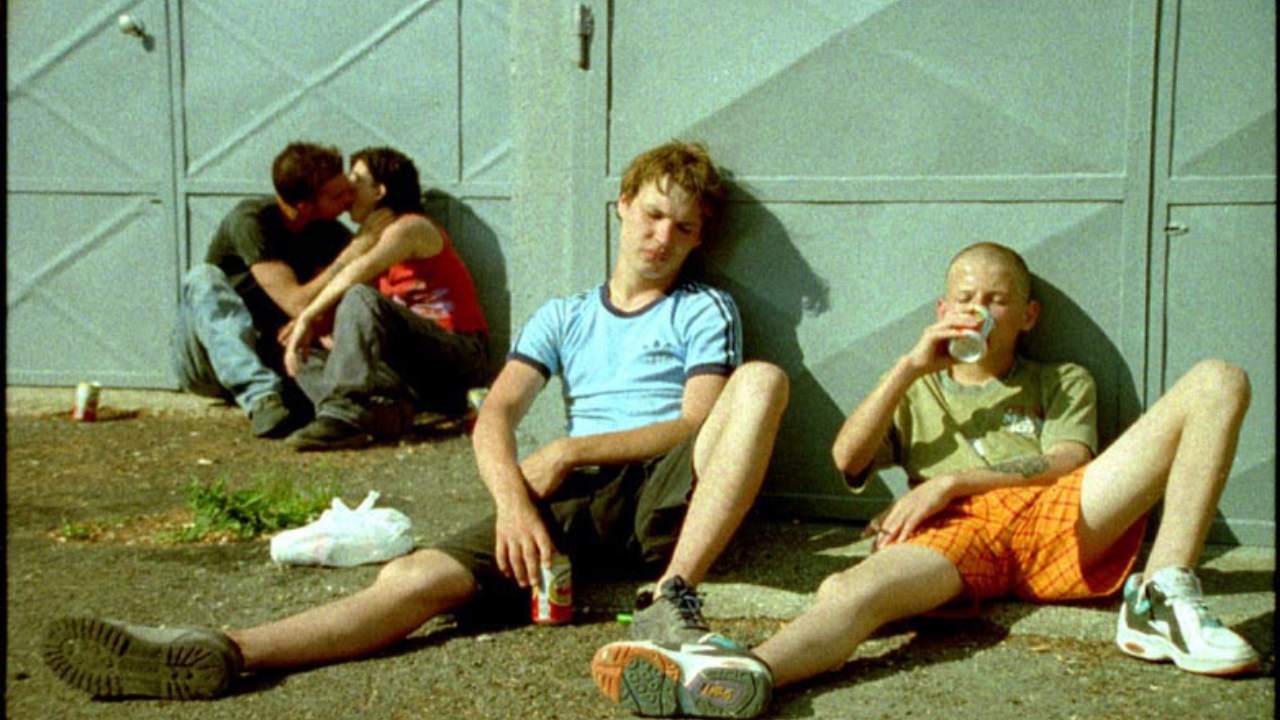
If the drama in Incident by a Bank came from passive observation of reality, then in the film Day After Day (2000) by Kornél Mundruczó – a Hungarian filmmaker with Romanian roots, later known for Delta (2008) and Pieces of a Woman (2020) – crime arises from a different kind of immobility: overwhelming boredom. The source of violence here isn’t a spectacular conflict nor violent escalation of events but the paralysing emptiness of everyday life. The film follows a group of teenagers left to their own devices during a sweltering day; they drift aimlessly, indulge in random pleasures, but perform all these activities with a marked lack of interest. Time seems to stand still, and the seemingly harmless stagnation gradually thickens until an act of violence emerges from this apathy. Day After Day foreshadows a recurring motif in Mundruczó’s later work: crime born of boredom – gratuitous, devoid of rational motivation, directed at a random victim. It’s a world where tragedy arises from seemingly innocent, youthful frolic, exposing moral atrophy and existential void. Mundruczó was recognised at KFF with the Silver Dragon.
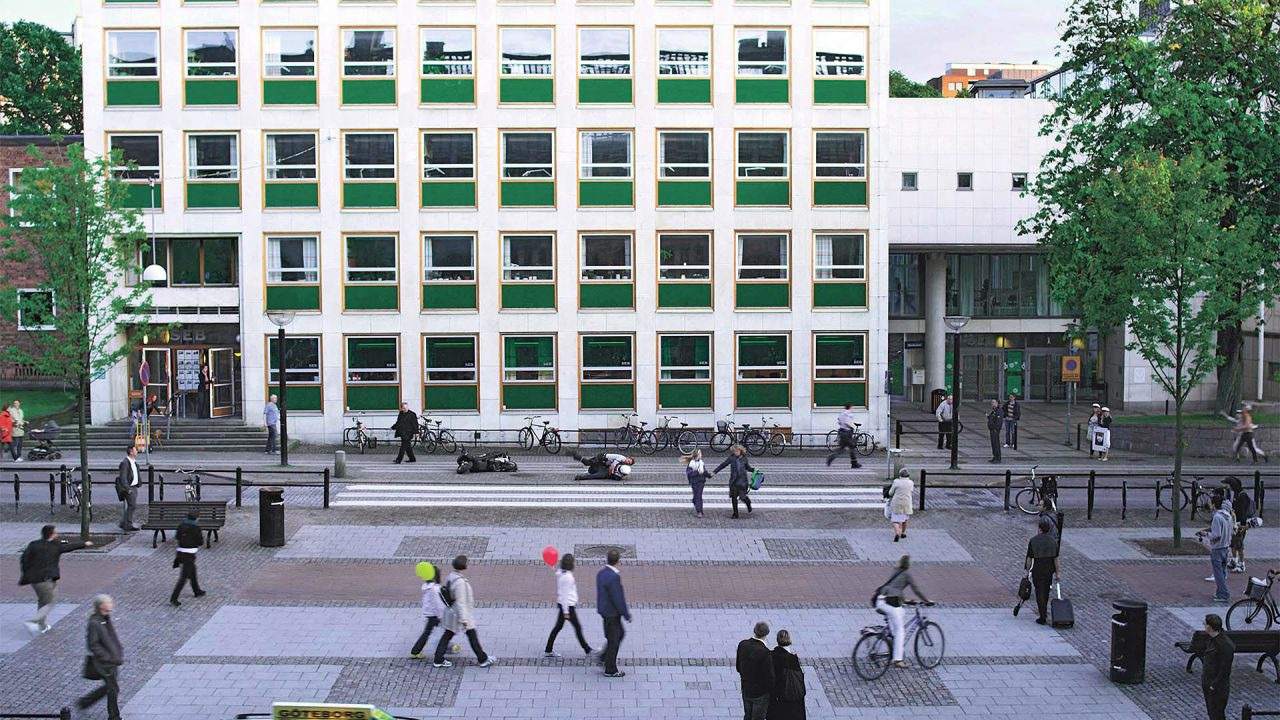
The short film Incident by a Bank (2009) by Ruben Östlund – later creator of The Square (2017) and Triangle of Sadness (2022), honoured with Palmes d’Or in Cannes and Oscar nominations – is a precisely composed, ironic reconstruction of a true event that took place in Stockholm in June 2006. Filmed in a single, uninterrupted take, the film involves over 90 performers, creating an intricate choreography for the camera and recreating the course of a failed bank robbery. Östlund gradually shifts the focus from the criminal act itself to the attitude of passive observers, revealing the mounting farcical nature of the situation and the indifference of most bystanders. The camera ceases to be a transparent recording device. It takes the role of central protagonist, simultaneously restricting the viewer’s access to the most violent moments and, with almost documentary austerity, registering social apathy. Teetering between drama, comedy, and crime thriller, the film heralds the director’s characteristic style, combining satire with piercing social observation. At the Krakow Film Festival, Östlund captivated both the Student Jury and the professional jury, receiving the Silver Dragon for best fiction film.
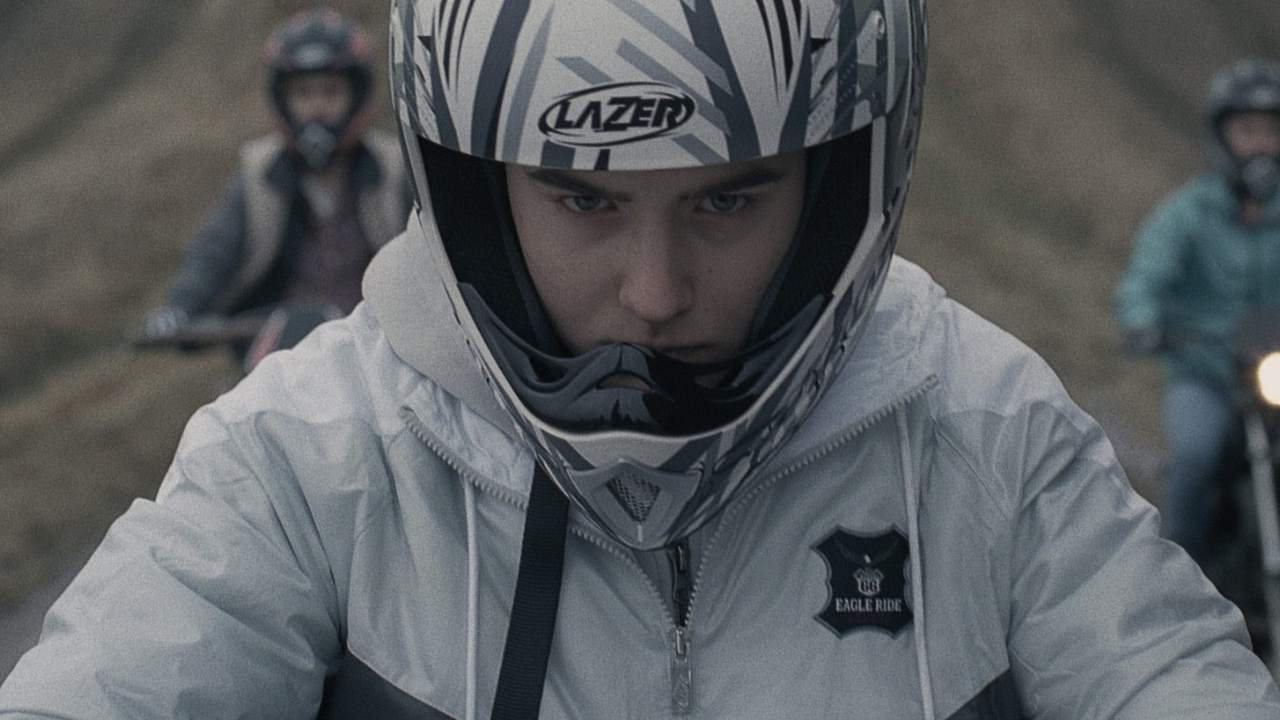
In Without Snow (2011), Magnus von Horn – later author of Sweat (2020) and The Girl with the Needle (2024) – also focuses on the world of teenagers, but instead of apathy, he shows an excess of extreme emotions that contrast with cold, austere frames. The film pulses with tension: cruel jokes, humiliation, first loves, jealousy, and desire create an explosive mixture leading to a dramatic reversal of roles when – suddenly – one of the perpetrators ultimately becomes a victim himself. The ascetic form intensifies the sense of realism and impending tragedy. This precisely constructed story brought the director, amongst other honours, the Silver Hobby-horse in the National Competition at the Krakow Film Festival.
“Masters in Shorts” creates a unique opportunity to trace the birth of the artistic identities in directors who today belong to the world’s elite, win top accolades, and shape contemporary cinema. Festival audiences will see their early work – films somewhat overshadowed by later successes, yet still moving, significant, and crucial for understanding their creative journey. It was in the short form that they shaped their authorial language – some remained faithful to it, others treated it as a creative testing ground before entering feature-length filmmaking. The presented films reveal the origins of their styles, sensibilities, and artistic courage, reminding us that the great names of cinema began with intimate yet remarkably intense stories, whose first encounters with wider audiences often took place precisely here – at the Krakow Film Festival.
Films in the “Masters in Shorts” section:
- Aria Diva, dir. Agnieszka Smoczyńska, Poland, 35’, 2007
- Without Snow, dir. Magnus von Horn, Poland, Sweden, 35’, 2011
- Day After Day, dir. Kornél Mundruczó, Hungary, 24’, 2000
- Incident by a Bank, dir. Ruben Östlund, Sweden, 10’, 2009
- The Tube with a Hat, dir. Radu Jude, Romania, 25’, 2006
- Wasp, dir. Andrea Arnold, United Kingdom, 26’, 2003
Insider Passes for the 66th Krakow Film Festival are now on sale!
The Krakow Film Festival is on the exclusive list of film events qualifying for the Academy Awards® in short film categories (fiction, animation, documentary) and feature-length documentary, the European Film Awards in the same categories, and serves as a qualifying event for the BAFTA Awards.
The Krakow Film Festival is organised with financial support from the City of Krakow, the Ministry of Culture and National Heritage, the Polish Film Institute, and the Creative Europe MEDIA Programme. The Polish Filmmakers Association serves as co-organiser.
The 66th Krakow Film Festival will be held in cinemas from 31 May to 7 June 2027 and online on KFF VOD from 5 June to 19 June 2026.